About the artist
Hannah Foley.
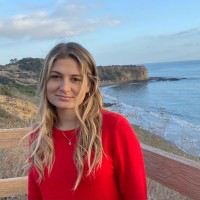
Hannah Foley is an interdisciplinary artist from Southern California whose practice explores the relationship between memory, materiality, and photographic representation. Working across traditional darkroom photography, alternative photographic processes, and mixed media, she is particularly interested in the limits of photography as a means of documentation and the capacity of physical materials to preserve, distort, and transform memory.
In her words
Artist statement
My practice begins with a question about the relationship between an image and the thing it represents. Photography is often understood as evidence of existence, a physical trace of something that was once there. Yet I am interested in the limits of this understanding, particularly when the subject of a photograph no longer exists in the form in which it was captured. An image may faithfully document a place, person, or moment without faithfully representing our memory of it. Much of my work explores this distinction, questioning whether abstraction and material transformation might allow a photograph to become less faithful to its subject, but more faithful to the memory of that subject.
I investigate these ideas through an experimental photographic practice that brings traditional darkroom techniques into conversation with unconventional materials, including glass, brass, and chemically altered photographic surfaces. I am drawn to the physical properties of these materials and the contradictions they embody. Glass, formed through intense heat, can appear both enduring and extraordinarily fragile. Metal, often associated with permanence, is itself susceptible to oxidation and decay. By transferring photographs onto these surfaces and allowing chemical reactions to alter their appearance, I explore how materials traditionally understood as vessels of preservation might instead make the passage of time visible.
Central to this practice is a willingness to surrender some measure of control over the photographic image. Where traditional darkroom techniques often demand precision in exposure, development, and tonal balance, I experiment with processes that invite irregularity and chance. By applying developer directly to photographic surfaces and allowing chemical reactions to determine the resulting forms, I produce images whose appearance depends as much on the duration and conditions of their making as on the original negative. In these works, time is not simply something represented by the photograph, but a material force acting upon it.
My interest in these processes is ultimately rooted in the relationship between personal memory and history. Drawing from family archives and images of familiar places, I consider how the past persists in forms that are necessarily incomplete, subject to change with each act of recollection. Rather than treating distortion and deterioration as failures of photographic preservation, I approach them as possibilities for a different kind of fidelity. The resulting works may depart from the physical appearance of their subjects, but in their ambiguity, they seek to remain true to something less tangible: the experience of remembering.